Showing posts with label ICEX. Show all posts

Saturday, March 17, 2012

Computer Science and Information Technology in Malta

On one of the sites we were mapping, we had the pleasure of meeting the head of the Engineering Department from the University of Malta and two students in order to let them view our data collection process. Erik and I got to interview them about our cultural research projects for our ethnic studies class.

My cultural research project is on the role of Computer Science and Information Technology in Malta. The idea of my project came from the startling fact that Malta has very few natural resources. One of the papers I was reading reported that there are "four extractive industries on which manufacturing might be built-- mining,forestry, fishing, and agriculture"[1]. It concluded that Malta has an insufficient environment for any of these industries[1]. Having few local resources for manufacturing severely limits what Malta's economy can do.

This challenged me to think of possible major industries for Malta. I came up with the idea that if the country couldn't base it's economy on making physical products then why can't it make information based products?

Upon talking to the students and the department head, I was informed that unlike Cal Poly, Computer Science is not part of Engineering but is part of their relatively new department of Information and Communication Technology. This didn't affect the quality
of the information that they gave me.

They told me that there is heavy investment in Computer Science and Information Technology. In the latest Business Research and Innovation report from the National Statistics Office of Malta, they reported that 29.47% of all intramural research and development expenditures in 2004 were in computer and
related activities[2].

Also, Maltese government research and development expenditures have increased from €4.1 million to €15.7 million in 2010[3]. Research and development specifically in Engineering and Technology has doubled since 2008 making it the most funded major field of science in Malta. This can be seen in the graph below.


The idea of heavy investment in Computer Science and Information Technology wasn't only reaffirmed by them but was also mentioned by Timmy Gambin who has been helping coordinate our research in Malta. He informed me that the University is constructing a building dedicated to Information and Communication Technology. Upon further research I found that the University was awarded a sum of €17.3 million for the project from the European Regional Development Fund[4]. It was said to be built because of the high demand for Information and Communication Technology graduates[4].

This is some of the information I have come across and I will be reporting on more very soon.

Works Cited

1. Young, B. S. "SocietyThe Maltese Islands: Economic Problems and Prospects for Industrial Development." Geographical Review 53.2 (1963): 263-86. Print.

2. Malta. National Statistics Office. Business Research and Innovation 2004-2006. 2008. Print.

3. Malta. National Statistics Office. Expenditure on Research and Development in the General Government Sector: 2008-2010. 2011. Print.

4. "New ICT Facilities Building at University of Malta." Gozo News. 17 May 2009. Web. 17 Mar. 2012 .

Friday, March 16, 2012

Conquering 9 Cisterns and Welcoming Princeton Students!


It was a very warm day in Gozo today. We got to the farms outside of Victoria, set up our equipment and generator and proceeded to run through 9 cisterns, quickly and efficiently gathering sonar and video and then pulling back up to start again!


Some of the cisterns were quite exciting, like Cistern #1 which we found the hard way was filled with roots! As the ROV was pulled out of the cistern, a blanket of roots covered the entire body. A local farmer helped us to pull the roots out of the motors and off the ROV.

By the last cistern, we were on a roll. We were able to set up, deploy the ROV, scan, and pull the ROV back up in less than 10 minutes! We did have one bump in the road on this cistern, where we forgot to record our scan data, but it was quickly resolved.


When we got home to the apartments, three of the four Princeton Students were already there. We were introduced to Drew, Austin and Yingxue and were informed that Anna was out on a

quick trip to the University of Malta with Jane. The Cal Poly students and the Princeton students decided to take a quick trip to the rocky shore down the road from our apartments and jump in the water. Besides the freezing water, all Cal Poly students and faculty, minus Billy and Jane, managed to get in, even if for just a few seconds.


We returned to the apartment, washed up and ate a great dinner with all 14 of us! Afterwards Timmy came to say goodbye to Zoe and Jane, for the were leaving in the morning. They are very sad to be leaving during such a great time, but they are quite excited to be able to go home again.


Quite a busy and fun day! More tomorrow!

Friday, March 9, 2012

Leaving Sicily


Hello all!


Thursday afternoon/evening (3/8/12), it was decided that we would be leaving Sicily early due to an incoming storm. We decided to leave on Friday afternoon instead of taking the chance of


being stuck in Sicily until Monday or later.


So Friday morning we woke and packed up the rest of our belongings as well as all the robot stuff and headed to the Ferry that would take us back to Malta. It was about a 4 hour bus ride, but we stopped at a small mall and had lunch and Gelato!

We arrived at our destinatio

n with all of our stuff about an hour and a half before the ferry arrived.


Being dropped off at an empty dock we did wh

at all good, patient tourists do, we played frisbee. Erik supplied a flexible, neon green frisbee and we all took a turn determining how hard it really was to throw and catch a frisbee in the wind. Tim was by far the greatest by playing while carrying all of his luggage.

After a while, a nice man from security informed us that we needed to be on the other side of the dock to check in on foot. We carried all the robotic equipment and our luggage over to the other side and then proceeded to check in and wait inside a small building fo

r the ferry.


On the ferry ride, Tim, Tyler, Billy and Erik played multiple intense games of hearts, while Zoe, Jeff, Brent and I talked about as many topics as we could think of and Jane got hooked into her book on Malta during WWII.


Once in Malta's harbor the ferry took quite a while to dock due to increase speeds in wind. We waited, quite patiently, for a tugboat and proceeded to exit once docked.


Skipping ahead, we checked into our hotel (the Imperial Hotel) and got situated. Jane, Tyler, Brent, Tim, Billy and I went out for a quick dinner at a local cafe/restaurant and the rest went straight to bed. There were really strong winds all night, hints to the impending storm and we are really interested to see the storm as it passes over Malta!


Until later!

Monday, March 5, 2012

Tech Update

It's been a busy week here. Yesterday we packed up early in the morning and took a ferry from Valletta, Malta to Pachino, Sicily. From there we hopped a few buses and took a beautiful ride through the country, passing by the world's most active volcano (Mount Etna) along the way. We reached our hotel in Carini (in the province of Palermo, Sicily) in the afternoon and got situated for deployment. Billy will talk about that, so I will cover the other things that have been going on. Despite the nagging fatigue that we are all feeling, there have been some really great project improvements. Since these will also be addressed in similar blog posts, I will give a little update on mine: the archaeologist graphical interface.

I have already put together a majority of the framework for the interface, and recently began loading in cistern meshes. Due to the fact that Billy and Jeff have their code complete (aside from per-cistern fine tuning), the three of us can pump out a cistern model and have it online in about an hour. We will be doing this for each new cistern that we deploy the robot into. My project is still running into some choppiness which will be sorted out in 2-3 days.

Here is a sample of my progress as of today.

Note: If you are running Linux, you may run into difficulty with the Unity3D plugin.

I am still working on the textures/lighting of the cistern and water, the spherical linear interpolation of the rotational trackball (should be a quick fix!), and the photo selection on the right hand side of the interface. It may not be very easy to see, but right now all that the photo selection does is highlight a region on the wall that the selected picture shows. Once the photo selection is complete the model will rotate so that the highlighted area that the picture displays will be more visible and a frustrum with the robot's position and angle of view will be shown. I also intend to use Tim's higher quality go-pro pictures, rather than these stills from the video stream from last year. I might end up adding a big pop-up version of the photo as well. We'll see what happens. Aside from that, it's time to start rapidly uploading and spitting out cisterns as we deploy into them!

Sunday, February 26, 2012

Meetings and Technical Update

It truly has been a busy week. As that all us Cal Poly students leave tomorrow, much preparation was done this week. Many of us had to take one or more final exams, and finish final projects for our classes. Thursday night the team went out to dinner to take a small break from preparations and plan the packing of our technical equipment. On Friday we packed everything we needed from the Lair and confirmed some last minute details.

For a little more than the last week I have been helping Sara with the water and society part of ICEX. I worked to install the Omeka database system on the server space provided by the Cal Poly Computer Science Department. Due to my lack of experience in database installation it took longer than expected but on Friday it was successfully installed. The website for the database is not currently in a state that we would like to share with the public but I expect that it won't be very long until it is. Unfortunately, due to the time it took me to set up the database among the other work for this past week, I have not had the chance to work on the programming side of my project but Tyler and Tim have gotten some work done on the mounting of the Otter Box cases.These will house the salinity sensor, the pressure/temperature sensor and the PAM. See the post below for more details.

Monday, January 30, 2012

Ethnic Studies Paper

For our Ethnics Studies class this quarter, we were required to write about the papers read in class and our overall impressions of what we had just learned about engineering and society and their impacts on each other. Following is my Response Paper for this assignment:

One of the first things I thought of when reading these sources was how cultures have changed over time and how people’s loyalty to tradition has altered. Yet, even though cultures are constantly changing, we have a stereotypical view of how certain cultures are. For example, if I were asked to picture a Japanese family, the first scene I would think of is a big family sitting in an Asian style home with a small garden and pond and all the family members wearing kimonos and socks with sandals and eating sushi. Now I know that this is not the typical outfit of modern day Japanese people, however it is the image that I’ve always thought of first when thinking about Japanese culture.

I began thinking about how cultures have changed over time and why they do. I remembered a story my grandmother told me about her grandmother. Her grandmother was born and raised in Germany and came over to the United States. Once, during World War II, she went to the grocery store, my grandmother was with her. Two women became very cold and mean towards them both, because of her grandmother’s German accent, even going to the point of spitting on her.

When I talked about this with my grandmother, she said that there were many families who came over to the United States and tried to erase all traces of their previous cultures, in order to fit in, especially during wars. My grandmother remembers, that none of her mother’s family members were allowed to speak German anywhere while they lived in the United States, even going to the point that the children were not fully allowed to learn the language. Due to the fear of not assimilating into American culture, my family lost the part of its history and culture that came from Germany when my great-great-grandparents immigrated.

Lucena states in his article, “Culture as Dominant Images,” on page 1, “Dominant images create expectations about how individuals in that location are supposed to act or behave.” In my family’s case, in order to become more “American,” they tried to erase all the dominant images that were connected to the country they were born in.

De Courtivron’s article, “Educating the Global Student, Whose Identity is Always a Matter of Choice,” page 1, states “Today, young urbanized American men and women of 20 … are likely to have more in common with young Japanese men from Tokyo or young Turkish women from Istanbul than with their own grandparents.” Traditions aren’t being passed down as much anymore. There are less and less people that are embracing the cultures of their parents and grandparents. I believe this is mainly due to a changing world. With new technology, new ideas, and new concerns, the dominant images that were so central previously now hold little say in the current world. “The weight of the world used to be vertical; it used to come from the past, or from the hierarchy of heaven and earth and hell; now it is horizontal, made up of the endless multiplicity of events going on at once and pressing at each moment on our minds and our living rooms.” (De Courtivron, page 1)

This quote makes me visualize a line connecting many different people. In the past, the line was vertical with newer generations at the bottom and looking up to the generations of the past and seeing how they lived and worked. Now, I imagine the line horizontal, with people looking to their left and right, seeing what their neighbors are doing and not considering how their ancestors lived as much. This change in the “connection of people” is the changing of cultures and shifting of lifestyles.

In Hiller’s article, “Understanding Culture: The Discovery of the YEKOH Ritual,” page 228, he describes the SNAIDANAC people’s “ritual ironically creates divisions within the society at the same time that it provides the basis for general society identity and cohesion.” This tells me that these people realize that their ritual and culture is what makes them unique and a special race; however, it is also clashing with different ideas that coincide with a planet that is changing, evolving and moving forward.

I think culture is an interesting way of looking into people’s lives and their history. It makes me wonder how the changing of technology and people’s connections, will change the cultures people have. Culture, to me, is what makes a group of people unique from another group. But as the world moves forward and people become more global, meeting new people, ideas, and traditions, what will happen to independent cultures?

Saturday, January 21, 2012

Introduction to Malta


All of the ICEX students from Cal Poly are taking an Ethnic Studies class, taught by Dr. Jane Lehr, called Global Engineering. It is a "comparative examination of historical and contemporary engineering institutions in different national contexts" in which Malta is a major case study. Just recently we started reading about Malta. In class we started to discuss what we believe were some of the major people, ideas and events that affected Malta throughout it's history. Some of what we discussed can be found below.


For all of you who don't know, Malta is a small country made up of 3 islands located South of Sicily and East of Tunisia. It has an area of 316 square kilometers which is about 2.5 times the size of San Francisco. With such a small area and a population of approximately 408,000 people, it is the country with the highest population density in Europe and one of the countries with highest population densities in the world. Of the 408,000 people, 98% are Roman Catholic. Malta has two national languages, Maltese and English. The Maltese language is Semitic (meaning that it descended from Arabic) but also has Italian influences.


Malta has very little freshwater and gets more than half of its drinking water from desalination. It's economy is based heavily on trade. Its location in the Mediterranean Sea makes it a prime transshipment point. This fact has been realized by many groups throughout history making Malta consistently a spot for military contention. It has been attacked or ruled by the Arabs, the Normans, the Knights of Saint John, Napoleon, and Great Britain, among others. Malta won its independence in 1964, joined the European Union in 2004 and in 2008 adopted the Euro .

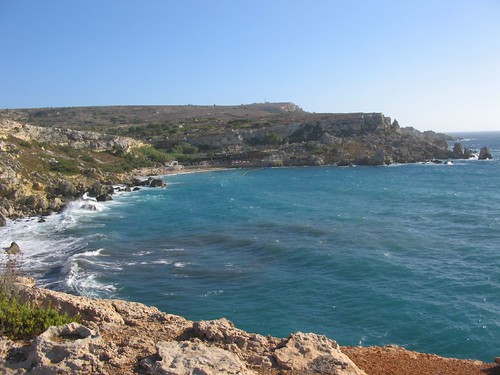
(Photo taken from Ramon Baile on flickr)

Thursday, January 19, 2012

Pacheco Elementary Labs and 3D Visualization Update

Hi everyone,

Today was our second of 6 robotics demos for the kids at Pacheco, and things went great! We have done lab #1 both weeks for different classes so far, and the kids love it. The lesson goes something like this:

We show up, the kids come in from recess, and Mrs. Banfield introduces us to them and tells them that we are there to talk about robotics, at which point every kid in the class gasps "OHHHHHHH ROBOTS!!!".

From there I start off with a powerpoint that shows Wall-E bumbling around on the screen collecting balls, and we split up into groups to talk with students about what the know and what they would like to learn about robots. I walk back to the front to ask them questions about better known robots like Roombas, and then Billy gets up to talk about one of the robots that was sitting around in the LAIR. After Billy talks about the brains, arms, and eyes of that robot, we split up into groups again to let the kids design a robot of their own on paper.

After that the fun begins. Tyler and Sara have a competition to see who can build a Lego robot the fastest, and then we ask the kids what they think these robots do. We tell them that the robots brains were programmed to follow lines, so when you lay white masking tape on the black carpet, the robots know how to stay on track. We then demonstrate by allowing each kid to lay down a piece of tape so that a track is made. We put the lego robots on the track and the kids watch as the robots follow the lines (and sometimes collide with each other). After that, we get back into groups to talk about what they learned today, and then I head back up to the front to introduce the solar robots that we will be playing with next time we meet them.

The kids are so enthusiastic about the lesson, and Mrs. Banfield is right there with them. Hopefully we can keep up the great work at Pacheco elementary in the next 4 weeks!


On the 3D visualization front: Jane, Sara, Brent, and I skyped with John "Pathfinder" Lester, who works at ReactionGrid developing 3D environments with which people can model things. He told us about some software (Unity3D and Jibe) with which we can carry out our project for our archaeologist friends. Unity3D is a video game development software that seems to be just what we need. I plan on getting some bigger projects up and running so that in the end, we can have a map of malta with specific sites that can be zoomed into. On clicking a site, a 3D textured version of it will pop up (hopefully with a 3D model of the cistern in it) that will have triggers that bring up descriptions of the area. More from me later!


Saturday, January 7, 2012

Winter Break

My winter break was quite busy, but during my spare time I did a little bit of work for ICEX. I am the scheduler for this trip and the program, so over the break I looked into ways to keep on top of it all to make sure all deadlines are met. Tyler gave me a link into a website called Trello and it seems like it's really going to help keep everything organized for me.

Also, I looked into using Google Earth to locate cistern sites. Unfortunately, I don't know much about Google Earth and wasn't able to figure out much. And lastly, I looked into a site called Omeka to use for my ICEX project. It seems like a good site in which to have a digital library and database for information we collect about Malta and its water and society.

This project using Omeka is targeted to be used to be a resource site for teachers and educators. It will (hopefully) have sources and information such that teachers can base lesson plans off of the information and resources on the website.

Monday, January 2, 2012

Winter Break Progress

Over winter break I had two tasks. The first task was to do some investigation into Google Earth's ability to display our findings. The second was to get everything prepared for our labs at Pacheco. The progress I made towards these two projects is summarized below:

Google Earth
I'm convinced that Google Earth will be a sufficient tool for sharing our results. It has every feature that we need: html formatting, easy to link to files from databases, image/video embedding, descriptions of each site, underground depth/maps. Additionally, it is commonly used software, making it easier to spread our findings.

That said, there are a few things that I haven't figured out yet. I don't know how to share a google earth file so that multiple people can edit it at once (aside from e-mailing the other person the file). I think the program has this capability, but I haven't figured out how it works yet. Another problem is that when you create a map of a place below ground (cisterns are below ground) the polygon won't show up on a map embedded into a website. The last problem is that I can get an embedded video to work on MY copy of google earth, but can't get an embedded video working in an embedded blog post like this one. Anyways, problems aside, here is a little sample that I made up.


If you have the Google Earth plugin installed, you should be able to view this. The camera should pan to my house and you will see some information about it when you click it. If you double click "Erik's house", it will zoom in to street view. Additionally, you may click the green polygon on the ground to see an outline of my underground lab, and again, some information on that. As far as I can tell, this is what we need for the project.


Pacheco Labs
I received a copy of the powerpoints and lecture notes from last year, and have been discussing everything with Chris, Jane, and the teacher from Pacheco (Jill). Looks like we're all going to meet up as a group on Wednesday at 12:10 to talk about the curriculum and maybe do a run through of the first demo that we will do for Jill's class on week 2. The first demo is a discussion of robotics, engineering, and then a demo of a line follower robot.

Over break I borrowed a Lego Minstorms kit from professor John Chen to make a line following robot. I got him working, but just barely. I was testing him out on brown cardboard with black electrical tape and poor lighting, and Jill's classroom is black/grey carpet so we will need to use masking tape. I will be going to her classroom on Wednesday afternoon to test out this one. The bots that we will be using for the week 4 & 5 demos will be borrowed from Jill, and the bots for the week 6 & 7 demos are in the LAIR, but need some repairing. I'll get to that in a week or two. That just about wraps everything up for now. More from me later!

Oh, and here are a few bad photos of the bot that I made for the first lab.


Thursday, December 29, 2011

Erik's Pre-Trip Learning Goals

Using what I know so far about ICEX, I have developed a few goals that I would like to have accomplished by the project's end. I'm sure that these learning goals will be revised as the quarter progresses, and I accept that there will be events that change my aim along the way that I have not yet considered. With that said, my pre-trip goals are the following:

I would like to gain enough knowledge of robotics and computer science principles to become a more well rounded systems engineer. In other words, I would like to be able to understand complex processes and systems that involve a variety of engineering disciplines. This is not a goal that can be perfected, but rather one that must be continuously worked towards. It will be difficult, and it does not end once ICEX is over (in fact, it never does)! I think it's safe to say that by partaking in the ICEX project, this is a goal that everyone on the team is working towards. I guess I'm in good company!

I was assigned two sub-projects to complete along the way. These projects are developing an interactive Google Earth (or other) copy of our findings for documentation and educational purposes, and keeping track of the curriculum that we will share with the kids at Pacheco Elementary and any other schools that we may be working with. My goal is to educate as many people as possible such that they will be interested in what robotics has to offer. Hopefully, if we do our job at Pacheco, a handful of the kids will use our labs as an incentive to work harder in school so that they can do the same things in their future. While the details of the Google Earth database are not as clear as of yet, I hope that the outcome of this sub-project will be just as beneficial.

Just like every other human, I have a knack for adventure. Malta will feed that knack! I'm ecstatic to be on another side of the planet learning about things that I have never encountered! When I'm on my deathbed and I ask myself if I lived a complete life, this is one of the things that I will use to convince myself that I did. Happiness is something that everybody strives for, and this is the best way that I can think of to be happy. My goal is to make the trip as fulfilling as it can possibly be; to jam it with adventure, to have a mind opening experience, and to bring back as many stories as I can cram into my brain.

Friday, November 11, 2011

Greetings from Princeton

Hello everyone! My name is Austin Walker, and I'll be going to Malta for part of the time with the ICEX team. I am from rural Indiana, and I'm currently a junior at Princeton University, where I am studying computer science. I got my first computer when I was 3, and I've been working with them ever since. I mostly work in Java and C, though I have also done some web-based programming as well. When I'm not buried under work, I'm probably either trying to get some new thing to work on my computer or at the University's rock gym. I enjoy caving, diving, backpacking, and pretty much anything else outdoors. I also love to travel; I've been to most of the US and to four continents (including Antarctica).

I'm really excited about being a part of the ICEX program this year. I will be working with Prof. Clark and Drew Boik on the software to build maps out of the data we get from the caves in Malta. We are already off to a good start here in Princeton, and I hope that we will have a great year all around.

Brent's Bio


Hi everyone,

My name is Brent Williams I am a third year computer science major. I have been programming for a little over 4 years now . My passions are technology and art. In my free time I love to play beach volleyball and create traditional and digital art. I plan to get a master's degree in computer science and work in the field of computer graphics. When not in school I can usually be found in my home town of San Ramon, California. I cannot begin to express how excited I am to be a part of this team!

The World Says Hello!!


Hey Everyone!

My name is Sara Lillard and I am super excited to work with all of you on this amazing program! A little bit about me: I'm a second year Aerospace Engineering from Denver, Colorado. I like to hang out with friends, listen to music, draw, read, hike, etc. when I get done with homework and studying. I have never been outside the continental US, with the exception of going to the Canadian border when I was a year and a half. I don't have a lot of experience programming, but I ready and willing to learn anything I need to!! I am really excited and can't wait to get to know all of you next quarter!

See you all soon!!

(P.S. I'm going to apologize for my title too, but reading Erik's post, I was inspired.)

Thursday, November 10, 2011

Hello World!


Hi everyone,

I'm Erik, and it looks like I'll get to know all of you pretty well in the next half a year. The fact that I'll be tagging along this March makes me feel like a five year old on Christmas Eve. I'm a Junior Materials Engineering student at Cal Poly, and spend my time (or whatever's left of it after the heaping pile of schoolwork has been subdued) rock climbing, distance running, and playing the guitar. I do a little bit of coding on the side, and I'm interested in pursuing some sort of graduate degree in computer science a little further down the line.

Anyways, I can't wait to meet everyone. This is going to be a fun quarter! See you all soon!
Here's a picture in case you see me around:


(P.S. sorry about the post title. Someone had to do it.)